Sushil Kumar: The Unbreakable Indian Wrestling Icon Who Changed India’s Olympic Story
He lifted Indian wrestling with historic medals and world-level glory, but his legacy also carries a difficult legal shadow.

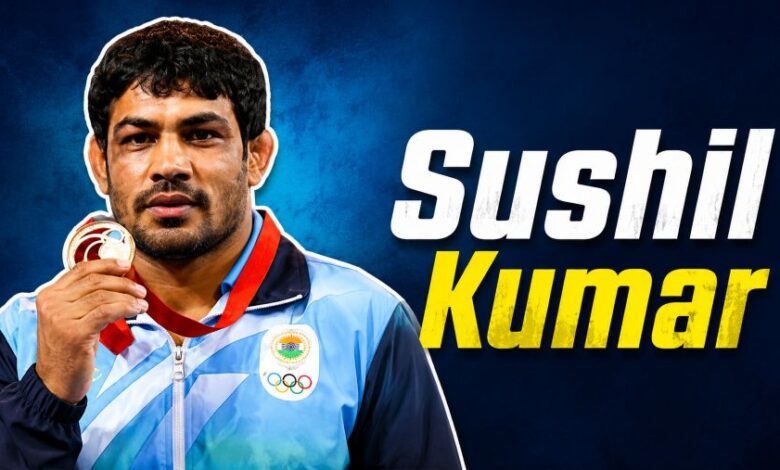
Table of Contents
ToggleIntroduction
Sushil Kumar is one of the most recognized names in Indian wrestling history. He is a former Indian professional wrestler who became famous for winning two Olympic medals and for giving Indian wrestling a new place on the global sports map. His success at the Beijing 2008 Olympics and London 2012 Olympics made him a symbol of discipline, strength, and national pride. Olympedia lists him as Sushil Kumar Solanki, born on 26 May 1983 in Baprola, Delhi, and records his Olympic bronze and silver medals.
His story is powerful because it includes both achievement and controversy. On the positive side, Sushil Kumar inspired a generation of young wrestlers by proving that an Indian professional wrestler could stand on the Olympic podium more than once. On the negative side, his later public image has been affected by the Sagar Dhankar murder case, where court proceedings and bail decisions have kept his name in the news.
Quick Bio
| Field | Details |
|---|---|
| Full Name | Sushil Kumar Solanki |
| Known As | Sushil Kumar |
| Gender | Male |
| Date of Birth | 26 May 1983 |
| Age | 43 years old |
| Birthplace | Baprola, Delhi, India |
| Nationality | Indian |
| Profession | Former freestyle wrestler |
| Famous For | Olympic silver, Olympic bronze, and World Championship gold |
| Sport | Wrestling |
| Style | Freestyle wrestling |
| Main Weight Categories | 66 kg and 74 kg |
| Height | 166 cm |
| Education | B.P.E. and M.P.E. |
| College | Noida College of Physical Education |
| Coach and Mentor | Satpal Singh |
| Father | Diwan Singh |
| Mother | Kamla Devi |
| Spouse | Savi Solanki |
| Major Awards | Arjuna Award, Rajiv Gandhi Khel Ratna, Padma Shri |
| Olympic Medals | Bronze in 2008, Silver in 2012 |
| World Title | 2010 World Wrestling Champion |
| Commonwealth Success | Gold medals in 2010, 2014, and 2018 |
Early Life and Family Background
Sushil Kumar was born in Baprola, Delhi, where wrestling culture had a strong influence on his childhood. His family background played an important role in his sports journey. His father, Diwan Singh, and mother, Kamla Devi, supported his growth, while the wrestling environment around him helped shape his ambition from a young age.
He began moving toward wrestling with seriousness during his teenage years. His early training was not built on luxury or advanced facilities; it was built on hard work, discipline, and traditional Indian wrestling values. This made his rise even more meaningful because he came from a local wrestling background and reached the highest level of international competition.
Education and Training
Sushil Kumar studied physical education and earned B.P.E. and M.P.E. qualifications from Noida College of Physical Education. The college lists him among its eminent alumni and connects his name with major Indian sports honors.
His wrestling career is closely connected with Chhatrasal Stadium and coach Satpal Singh. Training under a strong wrestling system helped him develop the technique, stamina, and mental toughness required to compete internationally. For an Indian professional wrestler, such training was essential because Olympic wrestling demands speed, timing, strength, and tactical awareness.
Personal Life
Sushil Kumar is married to Savi Solanki. She is publicly known as the daughter of his coach and mentor, Satpal Singh. This family connection also shows how deeply his personal life and wrestling life became linked through the sport.
His personal story has often been discussed alongside his sports success because he became a national figure after his Olympic medals. However, responsible biography writing should include only details that are publicly supported. His verified personal life mainly includes his family background, spouse, and wrestling-linked upbringing.
Career Start
Sushil Kumar started his Olympic journey at the Athens 2004 Olympics. That event did not bring him a medal, but it gave him experience at the highest level. Many athletes need such early exposure before they reach their best performance, and his later results proved that the 2004 setback was not the end of his dream.
His career start was important because it showed his ability to grow after disappointment. Instead of disappearing after Athens, he improved his skills and returned stronger. This progress helped him become an Indian professional wrestler with a powerful international identity.
Breakthrough Moment
The breakthrough moment in Sushil Kumar’s career came at the Beijing 2008 Olympics. He won the bronze medal in men’s freestyle wrestling, giving India its first Olympic wrestling medal since K. D. Jadhav’s medal in 1952. Olympics.com highlights the historic importance of that 2008 bronze for Indian wrestling.
This medal changed how Indian wrestling was viewed by many sports fans. It gave new hope to wrestlers, coaches, and families who believed in traditional wrestling but wanted international recognition. Sushil Kumar became a face of that change.
Olympic Glory
Sushil Kumar reached even greater fame at the London 2012 Olympics, where he won the silver medal in men’s freestyle 66 kg. This made him one of India’s most successful individual Olympic performers. Olympics.com describes his London 2012 medal as a historic silver that made him India’s individual two-time Olympic medallist at that time.
His Olympic journey is remembered because it combined consistency and courage. Winning one Olympic medal is rare, but returning four years later to win another medal is even harder. His bronze and silver medals gave Indian wrestling a stronger identity in world sport.
World Championship Success
In 2010, Sushil Kumar achieved another major milestone by becoming a World Wrestling Champion. This title made his career more complete because it proved that he was not only an Olympic medallist but also a world-level champion.
His World Championship success added respect to his name beyond India. For an Indian professional wrestler, winning a world title is a major achievement because the competition includes elite wrestlers from countries with long wrestling traditions.
Career Timeline
| Year | Sushil Kumar Career Event |
|---|---|
| 2004 | Competed at the Athens Olympics |
| 2006 | Won Asian Games bronze at Doha |
| 2008 | Won Olympic bronze at Beijing |
| 2010 | Became World Wrestling Champion |
| 2010 | Won Commonwealth Games gold in Delhi |
| 2012 | Won Olympic silver at London |
| 2012 | Served as India’s Olympic opening ceremony flagbearer |
| 2014 | Won Commonwealth Games gold in Glasgow |
| 2018 | Won Commonwealth Games gold in Gold Coast |
| 2019 | Competed at Senior World Championships in the 74 kg category |
United World Wrestling records his later senior competitions, including the 2018 Commonwealth Games and 2019 Senior World Championships in the 74 kg freestyle category.
Major Achievements and Awards
Sushil Kumar’s major achievements include Olympic bronze in 2008, Olympic silver in 2012, World Championship gold in 2010, and Commonwealth Games gold medals in 2010, 2014, and 2018. These achievements place him among the most successful wrestlers India has produced.
He has also received major Indian sporting honors, including the Arjuna Award, Rajiv Gandhi Khel Ratna, and Padma Shri. These awards reflect his contribution to Indian sport and his role in building a stronger wrestling culture in the country.
Public Image and Controversy
Sushil Kumar’s public image has been both inspiring and complicated. His sports career made him a national hero, especially for fans who saw his medals as a turning point for Indian wrestling. He represented discipline, physical strength, and the dream of reaching the Olympics from a local wrestling background.
At the same time, his image changed because of the Sagar Dhankar murder case. News reports state that the Supreme Court cancelled his bail in 2025 and that a Delhi court denied bail in February 2026, citing serious charges and concerns related to witnesses. These are legal proceedings, so the issue should be described carefully as an ongoing case connected with charges and court decisions.
Legacy and Historical Importance
Sushil Kumar’s legacy in Indian wrestling remains historically important. Before his Olympic success, wrestling already had deep roots in India, but his medals helped bring modern Olympic wrestling into mainstream national attention. His journey encouraged many young athletes to believe that Indian wrestlers could compete against the best in the world.
His impact is also visible in the way Indian wrestling gained more respect after his achievements. A strong sports legacy is not only about medals; it is also about opening doors for the next generation. In that sense, his career helped change the ambition level of Indian wrestling.
Conclusion
Sushil Kumar is a powerful and complex figure in Indian sports history. He rose from a wrestling background in Delhi to become a two-time Olympic medallist, World Champion, and one of the most famous names in Indian wrestling. His achievements gave confidence to Indian athletes and helped wrestling gain national attention.
His biography also includes a serious legal chapter that has affected his public image. Still, his sporting record remains an important part of India’s Olympic history. As an Indian professional wrestler, he proved that dedication, training, and mental strength can take an athlete from local arenas to the world stage.
FAQs
Who is Sushil Kumar?
He is a former Indian freestyle wrestler and two-time Olympic medallist.
What is Sushil Kumar famous for?
He is famous for winning Olympic bronze in 2008 and Olympic silver in 2012.
Where was Sushil Kumar born?
He was born in Baprola, Delhi, India.
Who is Sushil Kumar’s father?
He is the son of Diwan Singh.
Who is Sushil Kumar’s mother?
He is the son of Kamla Devi.
Is Sushil Kumar married?
He is married to Savi Solanki.
Who was Sushil Kumar’s coach?
He was closely trained and mentored by Satpal Singh.
What was Sushil Kumar’s biggest career achievement?
He won two Olympic medals and became World Wrestling Champion in 2010.