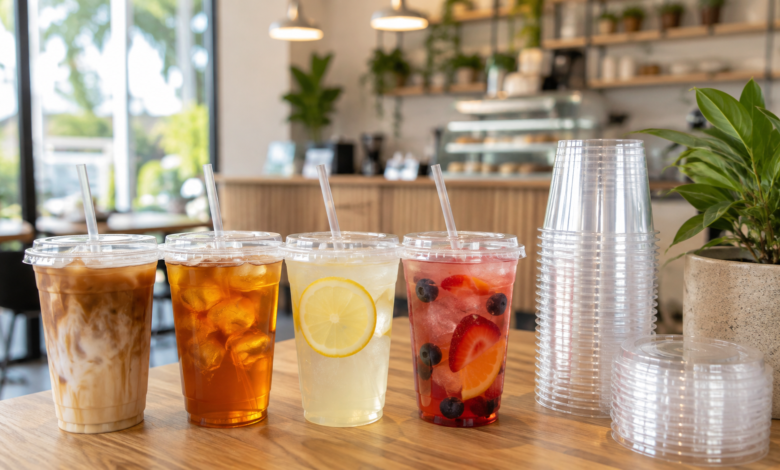
Cold drinks have become a major part of modern foodservice culture. Iced coffee, fruit tea, bubble tea, smoothies, cold brew, lemonade, and specialty beverages are now served everywhere from independent cafés to restaurant chains, hotels, events, and convenience stores.
The cup may appear to be a simple part of the experience, but choosing the right one involves much more than appearance.
Businesses need to think about transparency, strength, lid compatibility, temperature resistance, storage, branding, environmental claims, disposal infrastructure, and cost. As sustainability becomes more important to consumers and commercial buyers, PLA cups are increasingly included in those discussions.
PLA does not replace every conventional plastic cup in every situation. However, for suitable cold-drink applications, it offers businesses another material option worth understanding.
What Exactly Is PLA?
PLA stands for polylactic acid.
It is a bio-based polymer commonly produced using renewable plant-derived feedstocks. Once manufactured into a cup, PLA can have the clear appearance associated with conventional cold-drink plastics.
That transparency is important because drinks have become highly visual products.
Customers want to see:
- layers of milk and coffee;
- fresh fruit;
- tapioca pearls;
- colorful juices;
- matcha;
- whipped toppings;
- ice;
- herbs;
- citrus slices; and
- other decorative ingredients.
A transparent cup keeps these details visible while allowing foodservice businesses to explore a material with different sourcing and end-of-life characteristics from conventional petroleum-based plastics.
Businesses comparing cold-drink packaging can review product formats such as Bioleader PLA Cups to understand the types of sizes, shapes, and lid configurations available for commercial beverage applications.
The key is to evaluate PLA based on its real performance requirements rather than choosing it simply because it sounds more environmentally responsible.
Why Clear Cups Matter So Much
Restaurants spend significant time designing drinks that look attractive.
Consider a strawberry fruit tea with floating berries and citrus slices. Or an iced latte with layers of espresso and milk. A smoothie may use several colors, while bubble tea often depends on visible toppings at the bottom of the cup.
Hiding these products behind an opaque container removes part of their appeal.
This is one reason transparent cold cups remain important even as packaging materials evolve.
Clear cups allow customers to see what they are buying before the first sip. They also make beverages more photogenic, which matters in an era where customers regularly share food and drinks on social media.
For beverage brands, the packaging is therefore part of the product presentation.
PLA Is Primarily a Cold-Drink Material
One of the most important facts buyers need to understand is that PLA has temperature limitations.
PLA cold cups are generally intended for chilled or room-temperature beverages rather than hot liquids.
This makes them suitable for applications such as:
- iced coffee;
- fruit tea;
- milk tea;
- juice;
- smoothies;
- lemonade;
- cold brew;
- sparkling drinks;
- chilled desserts; and
- other cold beverages.
They should not automatically be treated as replacements for hot-drink cups.
Using packaging outside its recommended temperature range can result in deformation or poor performance.
This is why businesses should always define the beverage application before choosing the material.
PLA and PET May Look Similar but They Are Different
At first glance, PLA and PET cups can look almost identical.
Both may be transparent.
Both are widely used for cold beverages.
Both can be produced in familiar takeaway cup sizes.
However, they are different materials.
PET is a conventional petroleum-based plastic known for clarity and durability. It is widely used throughout foodservice and beverage packaging.
PLA is a bio-based polymer associated with certain compostable packaging applications.
The differences matter when considering:
- temperature resistance;
- storage;
- transportation;
- disposal;
- certification;
- local regulations; and
- environmental communication.
A foodservice operator should therefore avoid choosing a cup only by appearance.
Material specifications matter.
The Meaning of “Compostable” Needs Context
One of the biggest sources of confusion surrounding PLA packaging is the word compostable.
Some consumers interpret compostable to mean a product will quickly disappear anywhere after disposal.
That is not necessarily the case.
Compostable packaging is generally designed to break down under defined composting conditions. Depending on the product and certification, appropriate industrial composting infrastructure may be required.
This means a café cannot simply purchase PLA cups and assume the sustainability issue is solved.
Businesses should also investigate:
- local waste collection;
- commercial composting availability;
- applicable certification standards;
- disposal labeling; and
- customer education.
The waste-management system is part of the packaging decision.
Why Cafés and Beverage Shops Are Interested
Modern cafés are increasingly judged not only by the quality of their drinks but also by the overall customer experience.
Packaging is visible.
Customers notice what their drinks are served in, especially when brands actively communicate sustainability goals.
PLA cups can be particularly interesting for businesses whose concepts already emphasize:
- plant-based menus;
- organic ingredients;
- sustainable sourcing;
- reduced conventional plastic use;
- responsible procurement; or
- environmental initiatives.
However, the packaging needs to support the business operationally as well as visually.
A cup that fits the brand but performs poorly during service is still the wrong cup.
Lid Compatibility Can Be More Important Than Cup Size
Many buyers focus first on cup capacity.
They ask for 12 oz, 16 oz, 20 oz, or 24 oz cups.
But operationally, rim diameter can be just as important.
If several cup sizes share the same top diameter, the same lid may fit multiple sizes.
This can simplify inventory significantly.
Instead of storing three cup sizes and three completely different lid sizes, a business may be able to use one compatible lid family across several cups.
That can help reduce:
- storage space;
- purchasing complexity;
- staff mistakes;
- leftover lids;
- inventory counts; and
- ordering errors.
For busy cafés, these small improvements can have a noticeable effect.
Flat Lids or Dome Lids?
The right lid depends on the beverage.
Flat Lids
Flat lids are often suitable for standard iced coffee, juice, tea, and other drinks where toppings do not extend above the cup rim.
They create a compact package and are easy to stack.
Dome Lids
Dome lids provide additional vertical space.
They can be useful for:
- whipped cream;
- ice cream;
- smoothies;
- decorative toppings;
- fruit;
- desserts; and
- beverages with ingredients above the rim.
Some dome lids have straw openings while others may be designed without holes depending on the application.
Again, the drink should determine the packaging.
Choosing the Right Cup Size
More cup sizes do not automatically create a better menu.
Too many sizes can make purchasing and inventory management unnecessarily complicated.
Businesses should study actual beverage sales and identify a limited number of sizes that cover most customer demand.
Common cold-cup sizes may include:
8 oz
9 oz
10 oz
12 oz
14 oz
16 oz
20 oz
24 oz
The right combination depends on the menu.
A specialty coffee shop may rely heavily on 12 oz and 16 oz sizes.
A bubble tea business may prefer 16 oz and 24 oz.
A juice bar may require several larger formats.
An event caterer may prefer smaller standardized cups that are easy to handle in large quantities.
There is no universal answer.
Custom Printing Can Turn Cups Into Brand Assets
Takeaway cups leave the restaurant.
That makes them different from plates, bowls, and glassware used only inside the venue.
A customer may carry a drink through:
- an office building;
- a university;
- a shopping center;
- public transportation;
- a park;
- an event;
- a hotel; or
- a busy city street.
Every branded cup therefore becomes a small piece of mobile advertising.
Custom cup printing can include:
- logos;
- brand colors;
- simple illustrations;
- slogans;
- QR codes;
- social media handles;
- promotional campaigns; and
- disposal information.
The artwork does not need to be complicated.
In many cases, a clean logo and consistent color palette create a stronger impression than filling the entire cup with graphics.
Social Media Has Changed Beverage Packaging
Food and beverage presentation now extends beyond the physical store.
Customers photograph their drinks.
They post café visits on Instagram, TikTok, review platforms, and messaging apps.
A recognizable cup can become part of that content.
For businesses, this means packaging design should consider how the drink looks both in person and through a phone camera.
Clear cups work particularly well because the beverage itself becomes part of the visual design.
A colorful fruit tea or layered iced coffee can provide most of the visual interest, leaving the branding relatively simple.
Wholesale Purchasing Requires Planning
Businesses purchasing thousands or tens of thousands of cups need to think differently from consumers buying a sleeve of cups from a retailer.
Wholesale purchasing typically involves several additional considerations.
Minimum Order Quantities
Manufacturing custom packaging efficiently often requires minimum production quantities.
Custom printing may require larger volumes than plain stock cups.
Production Lead Time
Large orders need production planning.
Printed cups require artwork approval, printing setup, manufacturing, quality control, packing, and shipping.
Shipping Volume
Plastic cups are lightweight, but they take up considerable space.
This means freight costs may be influenced more by cubic volume than weight.
Storage
Businesses should make sure they have suitable storage conditions for the material being purchased.
PLA should be kept away from excessive heat during storage and transportation.
Mixed Sizes
Distributors and large foodservice operators may want to combine several cup sizes in a single shipment.
Suppliers should be asked whether this is possible and what minimum quantity applies to each model.
Samples Should Be Tested Before Bulk Orders
Specifications are useful, but physical testing is better.
Before committing to a large order, businesses should test cups under real operating conditions.
A useful sample test might include:
- Fill the cup with the actual beverage.
- Add the normal amount of ice.
- Check how the cup feels when full.
- Fit the intended lid.
- Insert the normal straw.
- Leave the beverage for the typical takeaway period.
- Check for deformation.
- Test stacking.
- Evaluate cup clarity.
- Review the overall customer presentation.
If custom printing is planned, artwork placement should also be checked carefully.
Graphics that look good on a flat digital file may appear different when wrapped around a cylindrical cup.
Certifications Matter for Commercial Buyers
Environmental packaging claims should be supported by appropriate documentation.
Importers, distributors, restaurant chains, and corporate buyers may need certification or testing information depending on their target market.
This is particularly important when terms such as compostable are printed directly on packaging.
Before placing a major order, businesses should verify:
- the exact material;
- applicable compostability standards;
- available certifications;
- food-contact testing;
- whether certification applies to the specific product; and
- any labeling requirements in the destination market.
This protects the buyer as well as the manufacturer.
Avoid Vague Sustainability Claims
Customers are increasingly skeptical of environmental marketing.
Statements such as:
“100% green”
“completely harmless”
“zero environmental impact”
or
“disappears naturally”
may oversimplify complicated material and waste-management issues.
Specific information is usually better.
Businesses should explain what the material is, how it should be handled, and what disposal conditions apply.
Accuracy builds more trust than exaggerated marketing language.
PLA Cups Are One Part of a Larger Packaging Strategy
One packaging material cannot solve every foodservice requirement.
A café may use several materials at the same time.
For example:
PLA or PET cups for cold drinks
paper cups for hot beverages
paper or fiber containers for takeaway meals
kraft boxes for bakery items
molded fiber packaging for certain foods
The goal should not necessarily be to force every product into one material family.
Instead, each packaging format should be chosen according to:
function, food type, temperature, customer expectations, local regulations, branding, logistics, and available disposal systems.
That creates a more practical packaging strategy.
Final Thoughts
PLA cups have attracted attention because they combine the clear appearance expected from modern cold-drink packaging with a bio-based material platform used in compostable applications.
For cafés, juice shops, bubble tea brands, event operators, restaurants, and distributors, they can be worth evaluating when cold beverage performance and appropriate end-of-life conditions align.
But choosing PLA should not be based on environmental terminology alone.
Businesses still need to examine temperature limits, storage requirements, cup sizes, lid compatibility, certifications, printing, order quantities, logistics, and local composting infrastructure.
A successful packaging decision balances sustainability goals with everyday usability.
When those two priorities work together, PLA cups can become a practical part of a modern foodservice packaging system.