Toots Mondt Biography: The Powerful Wrestling Pioneer Who Helped Build Modern WWE
The story of a wrestler, promoter, and creative mind whose ideas changed professional wrestling forever

Introduction
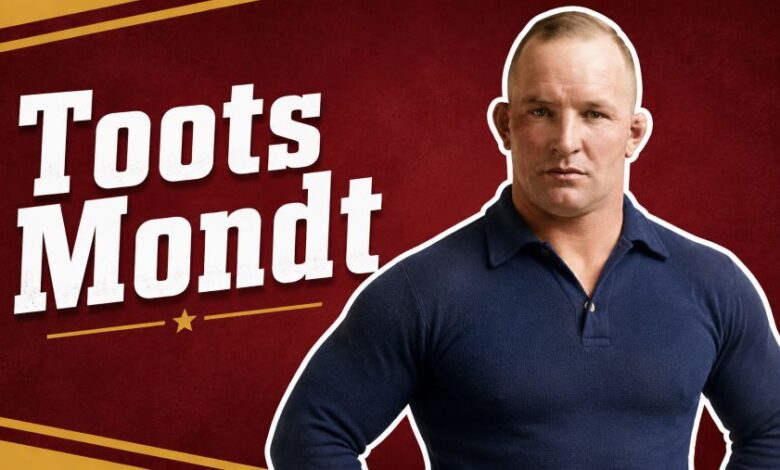
Toots Mondt was one of the most influential figures in the early history of professional wrestling. He was a wrestler, coach, booker, promoter, and business thinker who helped change wrestling from long technical contests into a faster, more dramatic, and more audience-friendly entertainment product. His work mattered because he did not only perform in the ring; he helped reshape how wrestling was presented to fans.
He is best remembered for his role in the Gold Dust Trio, his connection with Ed “Strangler” Lewis and Billy Sandow, and his later work with Vince McMahon Sr. in the promotion that became the World Wide Wrestling Federation. According to his official WWE profile, Mondt helped co-promote the company that became WWE and played a key role in the growth of the modern wrestling business.
Quick Bio
| Field | Details |
|---|---|
| Known Name | Toots Mondt |
| Commonly Listed Name | Joseph “Toots” Mondt |
| Historical Name Note | Some wrestling records list Joseph Raymond Mondt, while one major wrestling-history source records his early name as James Ervin Mondt |
| Gender | Male |
| Date of Birth | January 18, 1894 |
| Birthplace | Garden Grove, Iowa, United States |
| Hometown Listed by WWE | Wayne County, Iowa |
| Nationality | American |
| Profession | Professional wrestler, wrestling coach, promoter, booker, executive |
| Height | 6 ft 0 in |
| Weight | 260 lbs |
| Trainer / Influence | Martin “Farmer” Burns |
| Famous For | Gold Dust Trio, Slam Bang Western Style Wrestling, Capitol Wrestling, WWWF/WWE roots |
| Death Year | 1976 |
| Age at Death | 82 |
| Legacy Honor | WWE Hall of Fame Legacy Wing |
Who Was Toots Mondt?
Toots Mondt was an American professional wrestler and promoter who became one of the early architects of modern wrestling. He understood that wrestling needed more than strong athletes and long matches. It needed pace, structure, drama, stars, rivalries, and a promotional system that could bring fans back again and again.
His importance comes from the way he helped modernize wrestling. Before his biggest creative period, many matches were slow and heavily technical. Mondt helped move the business toward a more exciting style that gave crowds action, emotion, and story. That is why his biography belongs among serious profiles and biographies of people who changed their industry from behind the scenes.
Early Life and Background
Toots Mondt was born on January 18, 1894, in Garden Grove, Iowa. His early years were connected to rural America, hard physical work, and the older sporting culture of the early 1900s. This was a time when professional wrestling was not yet a television product. It was seen at carnivals, local arenas, fairs, opera houses, and traveling athletic shows.
His family later moved to Colorado, and that part of his life helped shape his “Colorado Cowboy” identity. He came from the kind of background where strength, toughness, and confidence mattered. These qualities became important when he entered professional wrestling, because early wrestlers often had to prove themselves in front of live crowds and local challengers.
Name, Nickname, and Identity
The name history of Toots Mondt needs careful wording because sources are not fully consistent. Many wrestling profiles list him as Joseph Raymond Mondt. However, historical wrestling research has also recorded his early name as James Ervin Mondt and explains that he later adopted the name Joseph.
The nickname “Toots” appears to have developed from the name “Tudor,” which he used during his early wrestling and performance years. For a safe and accurate biography, the best wording is to call him Toots Mondt or Joseph “Toots” Mondt, while noting that historical records contain some name variation. This avoids making an uncertain claim sound absolute.
Education and Wrestling Training
There is no strong public record of Toots Mondt attending a specific college or earning a formal academic degree. His most important education came from wrestling itself. He learned through training, traveling, physical contests, and old-school catch wrestling culture.
Martin “Farmer” Burns is one of the most important names connected with Mondt’s development. Burns was a respected wrestling teacher and one of the great figures of early American wrestling. Mondt’s exposure to that environment helped him understand not only holds and counters but also discipline, conditioning, and the psychology of performance.
Early Wrestling Career
Toots Mondt began his professional wrestling journey during the early 1910s. WWE lists his pro wrestling career as beginning in 1912, when he was still a young man. Other historical accounts suggest he may have wrestled even earlier in local settings, but 1912 is the cleanest date to use for a general public biography because it is supported by WWE’s official profile.
His early wrestling life was not glamorous. He worked in a rough and demanding business where performers traveled, faced difficult crowds, and had to adapt quickly. Mondt also spent time in fair and carnival-style settings, where wrestling was often mixed with challenge matches, athletic demonstrations, and showmanship. These experiences helped him understand what made audiences react.
Career Breakthrough
Mondt’s major breakthrough came when he became connected with Ed “Strangler” Lewis and Billy Sandow. Lewis was one of the biggest wrestling names of his era, while Sandow was a smart manager and business figure. Together with Mondt, they formed the Gold Dust Trio.
The Gold Dust Trio became one of the most important creative groups in professional wrestling history. Their influence was not limited to one wrestler or one championship. They helped change the structure of the business. They created better touring systems, stronger match planning, more exciting presentation, and a product that could be sold from city to city.
The Gold Dust Trio
The Gold Dust Trio was made up of Toots Mondt, Ed “Strangler” Lewis, and Billy Sandow. This group helped professional wrestling become more organized and more entertaining. They focused on the full experience of wrestling, not just the result of a match.
Their approach helped wrestling move away from extremely long mat contests and toward matches that felt more dramatic and easier for regular fans to enjoy. This was a major change. Wrestling needed to attract paying crowds, and Mondt understood that fans wanted action, characters, momentum, and emotional moments.
Slam Bang Western Style Wrestling
One of Mondt’s most famous contributions was “Slam Bang Western Style Wrestling.” This was a faster and more exciting style that mixed wrestling skill with action and showmanship. It helped make matches more watchable for fans who did not want to sit through slow technical contests for hours.
This style mattered because it pointed wrestling toward the future. It gave matches more rhythm and public appeal. Modern fans who enjoy big moments, dramatic pacing, and crowd energy can trace part of that wrestling DNA back to innovators like Mondt. In this way, his impact was not only physical; it was creative and commercial.
Coaching and Behind-the-Scenes Work
Toots Mondt was not only an in-ring performer. He also worked as a coach and helped others improve. His background in catch wrestling and performance made him valuable to younger wrestlers and athletes who needed technical knowledge and confidence.
This behind-the-scenes role became even more important as his career developed. Some people in sports become famous for their own results, while others become powerful because they know how to build systems. Mondt belonged to the second group as much as the first. Like many long-lasting sports stories on Bio Newsly, including Sushil Kumar’s wrestling journey, his career shows how discipline and wrestling knowledge can create a legacy beyond one era.
Capitol Wrestling and WWWF Roots
The later part of Mondt’s career connected him directly with the roots of WWE. He worked with Vince McMahon Sr. and Capitol Wrestling Corporation, a promotion that became central to professional wrestling in the northeastern United States. This chapter is one of the main reasons Mondt remains important in wrestling history.
WWE’s Hall of Fame Legacy article says Mondt and Vince McMahon Sr. took control of Capitol Wrestling Corporation and renamed it the World Wide Wrestling Federation, now known as WWE. This connection gives Mondt a special place in the company’s historical foundation. He helped shape a promotion that later became a global sports entertainment brand through the WWE Hall of Fame Legacy story.
Bruno Sammartino and Star Building
Toots Mondt was also connected with the rise of Bruno Sammartino, one of the greatest champions in wrestling history. WWE credits Mondt and Vince McMahon Sr. with helping bring Sammartino into prominence. This was important because Sammartino became one of the most beloved and successful wrestling stars of his time.
Mondt understood that a promotion needed the right star at the right time. A strong champion could give fans a reason to return, follow storylines, and trust the product. This kind of talent-building was one of Mondt’s greatest strengths. He did not only think about matches; he thought about the future of the business.
Career Timeline
| Year / Period | Career Highlight |
|---|---|
| 1894 | Born in Garden Grove, Iowa |
| Early 1900s | Family moved to Colorado |
| 1912 | WWE lists this as the start of his professional wrestling career |
| 1910s | Built experience in early wrestling, fair, and carnival-style settings |
| Early 1920s | Became connected with Ed “Strangler” Lewis and Billy Sandow |
| 1920s | Helped form and influence the Gold Dust Trio |
| 1920s | Developed and promoted Slam Bang Western Style Wrestling |
| 1950s | Became part of the Capitol Wrestling business structure |
| 1963 | Capitol Wrestling’s line moved into the WWWF era |
| 1976 | Died at age 82 |
| 2017 | Honored in the WWE Hall of Fame Legacy Wing |
Major Achievements
Toots Mondt’s biggest achievement was helping change how professional wrestling was presented. He helped make wrestling faster, more dramatic, and more commercially useful. That change helped wrestling move closer to the entertainment format that later became popular around the world.
He also helped build promotional systems that could travel and repeat successfully in different cities. This is important because wrestling needed more than one strong show. It needed a model. Mondt’s ideas helped create a business structure around talent, story, timing, and promotion.
Public Image and Personality
Toots Mondt’s public image was that of a tough, clever, and highly influential wrestling mind. He came from an era where wrestling was physically demanding and politically complicated. Promoters had to be sharp, persuasive, and sometimes very hard-edged to survive.
He was not a modern celebrity with social media or constant interviews. His personality is mainly understood through his work. He appeared to be practical, creative, and ambitious. He knew that wrestling had to entertain people emotionally, not just impress them technically.
Wrestling Style and Creative Vision
As a wrestler, Mondt came from the catch-wrestling tradition. He understood real grappling, conditioning, and physical pressure. But his most important gift was his creative vision. He saw that wrestling could be shaped like a public performance without losing its athletic identity.
That mix of sport and entertainment made him different. Today, fans see similar balance in many combat sports and wrestling-related stories, from historical grapplers to modern fighters such as Renan Ferreira. Mondt’s story shows that athletic ability can open the door, but presentation and vision can change an entire industry.
Challenges and Controversies
Toots Mondt worked during a rough period in wrestling history. The business was full of regional politics, promoter conflicts, private deals, and rival groups. Because of that, some parts of his career are difficult to verify with modern public records.
For a useful and safe biography, it is better to avoid repeating weak claims as facts. What can be said with confidence is that Mondt operated in a challenging industry and was considered a powerful figure. He had admirers and critics, which is common for people who hold influence in a business built on competition, control, and promotion.
Death and Later Recognition
Toots Mondt died in 1976 at the age of 82. WWE notes that his influence continued after his death and that he is remembered in the Legacy Wing of the WWE Hall of Fame. That recognition shows that his role in wrestling history is still respected by the biggest wrestling company in the world.
His legacy also lives through the style of wrestling promotion that became standard after his era. He helped create a faster and more organized model. He helped show that wrestling could be built around stars, stories, repeat audiences, and major promotional control.
Legacy and Impact on Professional Wrestling
Toots Mondt’s legacy is powerful because he helped build the bridge between old-school wrestling and modern sports entertainment. He came from a world of tough grapplers and local contests, but he helped move the industry toward a bigger, more dramatic, and more profitable future.
His impact is similar to the kind of long-term sports influence seen in other athlete and competitor stories, such as Yared Nuguse’s rise and Javier Castellano’s racing comeback, where a career becomes meaningful not only because of wins but because of the story, discipline, and lasting effect. Mondt’s effect was not about one match. It was about changing the business itself.
Why Toots Mondt Still Matters
Toots Mondt still matters because professional wrestling today depends on many ideas he helped popularize. Faster pacing, stronger presentation, organized touring, character-driven promotion, and audience-focused booking all connect to the kind of thinking he brought into the industry.
He also matters because he reminds fans that wrestling history was not built only by champions. It was also built by promoters, bookers, trainers, and creative minds. Some of the most important people in wrestling history worked behind the curtain. Mondt was one of them.
Interesting Facts About Toots Mondt
Toots Mondt was part of the Gold Dust Trio, one of the most influential groups in wrestling history.
He helped develop Slam Bang Western Style Wrestling, a faster and more exciting approach to professional wrestling.
He worked in an era before wrestling became a television-centered industry.
His career connected old carnival-style wrestling with the early roots of modern sports entertainment.
He helped shape the business line that eventually became WWE.
He was honored in the WWE Hall of Fame Legacy Wing.
His story is especially useful for readers who want to understand how wrestling became a business, not just a sport.
His legacy also fits well beside other powerful sports and performance stories, including Nikki Fuller, because both show how wrestling-related public figures can be remembered for more than one role.
Conclusion
Toots Mondt was more than an early professional wrestler. He was a wrestling innovator who helped reshape the industry. His work with the Gold Dust Trio, his development of Slam Bang Western Style Wrestling, and his role in the Capitol Wrestling and WWWF story make him one of the most important behind-the-scenes figures in wrestling history.
His biography is valuable because it explains how professional wrestling became more organized, more dramatic, and more appealing to wider audiences. Toots Mondt helped create ideas that later generations built upon. Even decades after his death, his influence remains part of modern wrestling’s foundation.
Frequently Asked Questions
Who was Toots Mondt?
He was an American professional wrestler, promoter, booker, and creative figure who helped shape modern professional wrestling.
What was Toots Mondt famous for?
He was famous for the Gold Dust Trio, Slam Bang Western Style Wrestling, and his role in the early business history of WWE.
When was Toots Mondt born?
He was born on January 18, 1894.
Where was Toots Mondt born?
He was born in Garden Grove, Iowa, United States.
What was Toots Mondt’s real name?
He is commonly listed as Joseph “Toots” Mondt, but some historical records also connect him with the early name James Ervin Mondt.
What was the Gold Dust Trio?
It was the influential wrestling group of Toots Mondt, Ed “Strangler” Lewis, and Billy Sandow.
Did Toots Mondt help create WWE?
He did not create modern WWE alone, but he played an important role in the Capitol Wrestling and WWWF line that later became WWE.
When did Toots Mondt die?
He died in 1976 at the age of 82.