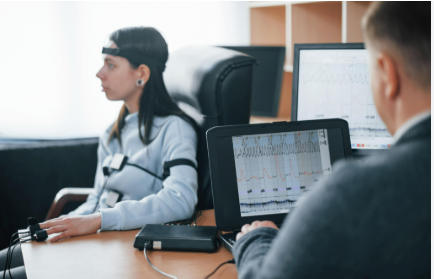
The polygraph test has this strange aura around it. Part science, part interrogation theater, part psychological chess game. You’ve probably seen it in movies—someone sweating under bright lights while a machine spits out jagged lines that supposedly reveal the truth. But real life isn’t quite that dramatic. Or that reliable.
Still, the idea is fascinating. Can a machine really tell if you’re lying?
Let’s unpack what’s actually going on when someone sits down for a polygraph test, and why the answer isn’t as simple as yes or no.
The Basics: What a Polygraph Actually Tracks
Here’s the thing: a polygraph doesn’t detect lies. It detects physiological changes.
That’s a big distinction.
When you’re hooked up to a polygraph, the device is measuring things like your heart rate, breathing pattern, blood pressure, and skin conductivity. In simple terms, it’s watching how your body reacts while you answer questions.
The underlying assumption is this: when people lie, they get nervous. And when they get nervous, their body reacts in measurable ways.
Sounds reasonable, right? It is—on the surface.
But think about it for a second. People get nervous for all kinds of reasons. Not just lying.
Imagine you’re sitting in a small room, wired to a machine, being asked questions about something serious—maybe a job screening or a criminal investigation. Even if you’re completely innocent, your body might still react. Your heart might race. Your breathing might shift. You might feel pressure just because the situation is intense.
The polygraph picks up all of that. It doesn’t know why it’s happening.
How the Test Is Structured
A typical polygraph session isn’t just a rapid-fire series of questions. It’s more controlled than that.
First, there’s a pre-test interview. This part can feel almost casual. The examiner explains the process, goes over the questions, and tries to establish a baseline. But don’t be fooled—this stage matters a lot.
It’s where they start reading you.
Then comes the actual test. The questions are usually split into different types. Some are neutral, like “Is your name John?” Others are relevant to the issue being investigated. And then there are control questions—these are designed to provoke a reaction even if you’re not guilty of anything.
For example, you might be asked something like, “Have you ever lied to get out of trouble?”
Most people have. That’s the point.
The examiner compares your physiological responses across these different types of questions. If your reactions spike more on the relevant questions than the control ones, that’s taken as a sign of possible deception.
It’s less about absolute truth and more about patterns.
Why It Feels Convincing
A lot of people walk out of a polygraph test convinced the machine “knows everything.” That’s not accidental.
Polygraph examiners are trained not just in operating the device, but in guiding the interaction. The environment, the tone, even the pauses—all of it can influence how a person feels and responds.
There’s a psychological component here that’s easy to overlook.
Picture someone who’s already anxious. They’re told the machine is highly accurate. They’re reminded to answer truthfully. Maybe the examiner gives subtle cues that they can “see something” in the readings. That pressure alone can lead to admissions or changes in behavior.
In some cases, the polygraph works less as a lie detector and more as a confession facilitator.
That doesn’t mean it’s useless. But it does mean the machine itself isn’t the whole story.
Accuracy: The Uncomfortable Truth
Now we get to the part people don’t love to hear.
Polygraph tests aren’t consistently reliable.
Different studies have produced different numbers, but most experts agree on one thing: the results can be wrong. Sometimes very wrong.
There are false positives—people who are telling the truth but appear deceptive. And there are false negatives—people who lie without triggering strong physiological responses.
Both happen.
Let’s say someone is naturally anxious or easily stressed. They might show strong reactions even when answering honestly. On the flip side, someone who’s calm under pressure—or trained to control their responses—might pass while lying.
And yes, people do try to game the system.
Can You Beat a Polygraph?
This question comes up all the time.
The honest answer? It’s not foolproof, but it’s not trivial either.
Some people attempt what are called “countermeasures.” These might include controlled breathing, tensing muscles at certain times, or using mental tricks to stay calm or create artificial reactions during control questions.
There are even guides floating around online that claim to teach these techniques.
Do they work? Sometimes. But not always.
Experienced examiners are trained to look for signs of manipulation. And if they suspect you’re trying to interfere with the test, that alone can affect how your results are interpreted.
So while it’s possible to influence the outcome, it’s not as simple as flipping a switch.
Where Polygraphs Are Used (and Where They Aren’t)
Polygraphs show up in a few specific areas.
Law enforcement agencies sometimes use them during investigations. Certain government jobs require them as part of the hiring process, especially in intelligence or national security roles. They’re also used in some private-sector situations, though less commonly.
But here’s an important detail: in many places, polygraph results aren’t admissible in court.
That tells you something.
If the system itself doesn’t fully trust the results in a legal setting, it raises questions about how definitive they really are.
Still, they persist. Partly because they can produce useful leads. Partly because they influence behavior. And partly because the idea of a “truth machine” is hard to let go of.
The Human Factor
At the end of the day, the polygraph is only as good as the person interpreting it.
Two examiners might look at the same data and come to different conclusions. That’s not ideal for something that’s supposed to be objective.
There’s also the issue of bias. If an examiner walks into the test already suspecting someone is lying, that can subtly shape how they conduct the session and interpret the results.
It’s not always intentional. But it happens.
And then there’s the person being tested. Their personality, stress tolerance, cultural background, and even their understanding of the process can all influence how their body responds.
No machine can fully account for that complexity.
A Quick Scenario
Imagine two people taking the same polygraph test.
One is a nervous but honest person who hates being judged. Their heart rate spikes at the slightest pressure. They overthink every question.
The other is someone who lies comfortably. Maybe they’ve done it before. Maybe they don’t feel much guilt. They stay calm, steady, almost detached.
Now guess who looks more “truthful” on the machine.
That mismatch is one of the biggest criticisms of polygraph testing. It doesn’t measure honesty—it measures reaction.
And those aren’t the same thing.
Why Polygraphs Still Exist
With all these limitations, you might wonder why polygraphs haven’t disappeared.
Part of the answer is tradition. They’ve been around for decades, and institutions don’t always move quickly to abandon established tools.
But there’s more to it.
Polygraphs can still be useful as part of a broader process. They can encourage people to disclose information. They can highlight inconsistencies that investigators might explore further. They can add another layer—imperfect, but sometimes informative.
Just not definitive.
So, Should You Trust a Polygraph Test?
Short answer: not completely.
Longer answer: it depends on how it’s being used.
If it’s one piece of a larger puzzle, fine. If it’s treated as the ultimate arbiter of truth, that’s where problems start.
Let’s be honest—humans are complicated. Our bodies react for all kinds of reasons. Fear, stress, embarrassment, confusion. Not just deception.
A machine that reads those signals can offer clues. But it can’t tell the whole story.
Final Thoughts
The polygraph test sits in that uncomfortable space between science and interpretation. It looks precise. It feels authoritative. But underneath, it’s still dealing with messy human signals.
That doesn’t make it useless. It just means it needs to be handled with caution.
If you ever find yourself facing one, it helps to understand what it is—and what it isn’t. It’s not a mind reader. It’s not a guaranteed lie detector. It’s a tool that measures how your body reacts under pressure.
And sometimes, that says more about the situation than about the truth itself.