Peter Beck: The Visionary CEO of Rocket Lab Who Redefined Global Space Access
From Self-Taught Engineer to Aerospace Pioneer Shaping the Future of Spaceflight

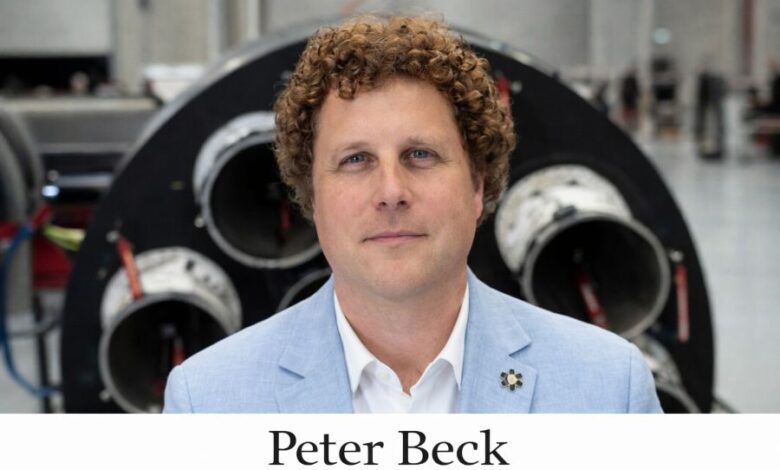
Table of Contents
ToggleIntroduction
Peter Beck is one of the most influential figures in modern aerospace, widely known as the CEO of Rocket Lab and the founder who transformed a bold idea from New Zealand into a globally respected space company. His journey is remarkable not because it followed a traditional academic or corporate path, but because it challenged nearly every convention in the aerospace industry.
As the CEO of Rocket Lab, Peter Beck has played a decisive role in making space more accessible, reliable, and commercially viable for small satellite operators around the world. His story is filled with powerful achievements, bold decisions, and real challenges, making him both an inspiring and realistic example of leadership in high-risk innovation.
Quick Bio
| Attribute | Details |
|---|---|
| Full Name | Sir Peter Joseph Beck |
| Known For | Founder & CEO of Rocket Lab |
| Nationality | New Zealand |
| Birthplace | Invercargill, New Zealand |
| Profession | Aerospace Engineer, Entrepreneur |
| Company | Rocket Lab USA, Inc. |
| Position | CEO, CTO, Chairman |
| Marital Status | Married |
| Children | Two |
Peter Beck’s Early Life and Mechanical Curiosity
Peter Beck was born and raised in Invercargill, New Zealand, a place far removed from the world’s major aerospace hubs. Despite this geographical distance, his curiosity for machines, engines, and propulsion systems emerged at a very young age. He spent much of his childhood experimenting with mechanical devices, building engines, and learning how things worked through hands-on experience rather than textbooks.
This early exposure shaped his mindset as a problem-solver. Instead of being limited by formal structures, Peter Beck developed a habit of learning by doing. This practical approach later became a defining strength in his career, allowing him to challenge traditional aerospace assumptions with innovative solutions.
Education and Self-Taught Engineering Path
Unlike many aerospace leaders, Peter Beck did not attend university or earn a formal engineering degree. Instead, he completed a tool-and-die maker apprenticeship at Fisher & Paykel, where he gained deep practical knowledge of precision engineering. This unconventional educational path initially appeared to be a disadvantage in a field dominated by academic credentials.
However, this same background gave Beck a unique edge. He learned engineering from the ground up, focusing on efficiency, manufacturability, and real-world problem solving. His self-taught expertise later became central to Rocket Lab’s engineering philosophy, emphasizing simplicity, innovation, and cost control.
Start of Career and Professional Growth
Peter Beck began his professional career as a precision engineering apprentice before moving into product design and yacht engineering. These roles exposed him to advanced materials, structural design, and complex systems integration. Over time, he developed a strong understanding of how high-performance systems behave under extreme conditions.
Later, his work at Industrial Research Limited allowed him to explore advanced composites and materials science. This experience proved critical when he began designing lightweight rocket structures. His early career was not glamorous, but it built the technical foundation that would later support Rocket Lab’s success.
Founding Rocket Lab: A Bold Business Venture
In 2006, Peter Beck founded Rocket Lab in Auckland, New Zealand, with a clear and ambitious mission: to provide reliable and affordable access to space for small satellites. At the time, the space industry was dominated by large rockets and government agencies, leaving smaller customers underserved.
The decision to start Rocket Lab was bold and risky. Funding was limited, expertise was scarce, and skepticism was widespread. Yet Beck’s vision was clear. He believed small satellites deserved dedicated launch services, and he was determined to build a company capable of delivering them efficiently.
Rise as the CEO of Rocket Lab
As the CEO of Rocket Lab, Peter Beck led the company through years of development, testing, and failure. One of Rocket Lab’s earliest milestones was the successful launch of the Ātea-1 rocket, which became the first privately developed rocket from the Southern Hemisphere to reach space. This achievement marked a turning point, proving the company’s technical credibility.
Under Beck’s leadership, Rocket Lab developed the Electron rocket, a launch vehicle specifically designed for small satellite missions. The Electron’s success positioned Rocket Lab as one of the world’s most active private launch providers, reinforcing Beck’s reputation as a visionary CEO who could execute as well as imagine.
Business Expansion and Global Influence
The growth of Rocket Lab extended beyond launches. Under Peter Beck’s leadership, the company expanded into satellite manufacturing, spacecraft systems, and space services. The relocation of Rocket Lab’s headquarters to the United States strengthened its global presence and access to commercial and government customers.
As CEO of Rocket Lab, Beck has balanced innovation with business discipline. While his leadership style emphasizes engineering excellence, he has also faced criticism and pressure during launch failures and development delays. These challenges highlight the negative side of operating in a high-risk industry, yet Beck’s ability to recover and improve has reinforced long-term confidence in his leadership.
Leadership Style and Engineering Philosophy
Peter Beck is known for his hands-on leadership style. Unlike many executives, he remains deeply involved in technical decisions, often emphasizing speed, iteration, and learning from failure. This approach has helped Rocket Lab move quickly in a competitive market, but it also demands resilience and accountability.
His philosophy combines optimism with realism. While he believes strongly in the future of space commercialization, he openly acknowledges the technical and financial risks involved. This balance of positive ambition and honest assessment has become a defining characteristic of his leadership.
Recognition, Honors, and Industry Impact
Peter Beck’s contributions to aerospace have been widely recognized. He was appointed a Knight Companion of the New Zealand Order of Merit for his services to aerospace and innovation. Additional honors reflect his role in positioning New Zealand as a meaningful player in the global space industry.
Beyond awards, his true impact lies in changing how the world approaches space access. By focusing on small satellites and frequent launches, Beck helped reshape market expectations and opened new opportunities for scientific, commercial, and defense missions.
Conclusion
Peter Beck’s journey from a self-taught engineer in New Zealand to the CEO of Rocket Lab is a powerful example of unconventional success. His story includes both remarkable achievements and undeniable challenges, reflecting the reality of innovation at the edge of technology. Through persistence, technical insight, and bold leadership, he has permanently influenced the global aerospace landscape.
As the CEO of Rocket Lab, Peter Beck continues to push boundaries, proving that vision combined with execution can redefine entire industries. His legacy is still unfolding, but his impact on modern spaceflight is already undeniable.
Frequently Asked Questions (FAQ)
Who is Peter Beck?
Peter Beck is a New Zealand aerospace engineer and entrepreneur, best known as the founder and CEO of Rocket Lab.
What is Peter Beck famous for?
He is famous for building Rocket Lab into one of the world’s leading private space launch companies, focused on small satellite missions.
Is Peter Beck the CEO of Rocket Lab?
Yes, Peter Beck serves as the CEO, CTO, and Chairman of Rocket Lab.
Did Peter Beck attend university?
No, he is a self-taught engineer who completed a tool-and-die apprenticeship instead of formal university education.
Why is Peter Beck important to the space industry?
Peter Beck played a key role in making space more accessible by developing affordable, dedicated launch services for small satellites.